Winsford Cross: The Democracy of Everyday Spaces
Winsford Cross Shopping Precinct wasn't built for photographers. It was more built for practicality - a covered walkway connecting shops, keeping the rain off, getting people from A to B without fuss. But that's exactly why I found myself there with my camera during a work time lunch break.
The metallic rattle of trolleys being dragged over uneven paving, the electronic beep of card readers from the pharmacy, fragments of phone conversations that drift and disappear. A mother calling to her child creates a brief crescendo before fading into the hum of everyday life.
These aren't the carefully designed sound environments of modern shopping centres with their piped music and engineered ambience. This is raw functionality - concrete and glass doing exactly what they were designed to do, nothing more.
Winsford Cross smells like real life. There's the warm yeast smell drifting from the bakery, mixing with disinfectant from the chemist and the faint petrol fume tang from the road beyond. Someone's eating chips nearby - proper chippy chips. The air carries traces of cleaning products, wet concrete after morning rain, and something indefinably institutional that reminds you this is a place built in the 1960s.
These aren't Instagram-friendly aromas, but they're honest ones. The kind of everyday sensory experiences that get edited out of architectural photography but tell you more about how spaces actually work than any design magazine ever could.
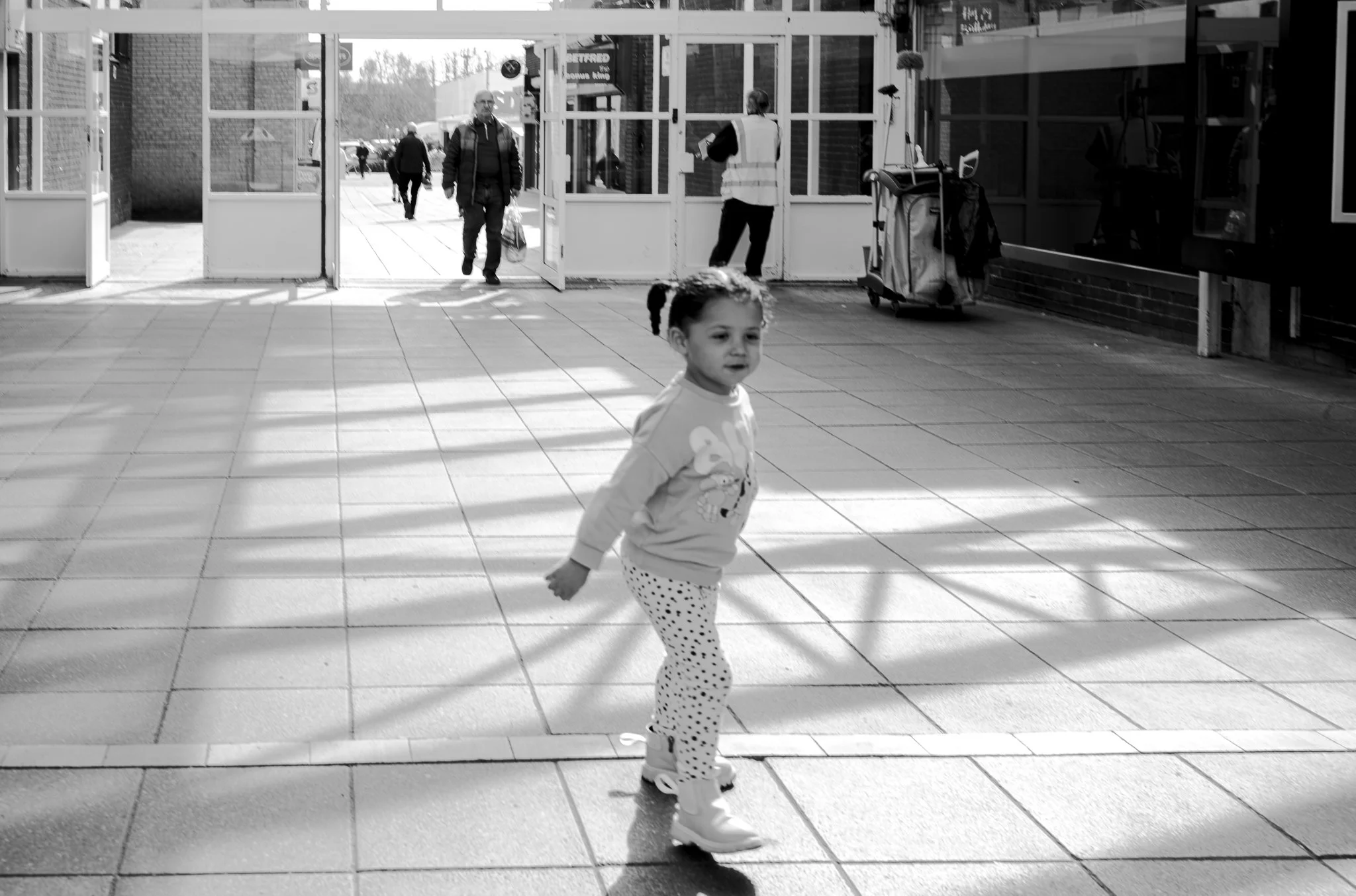
The precinct's lighting is entirely accidental and entirely beautiful. Fluorescent strips mix with daylight filtering through glass panels. Shadows fall at awkward angles created by practical considerations - where to put the bins, how to route the drains, where the structural supports need to go.
In black and white, these lighting accidents become composition. The harsh contrast between covered walkway and open sky creates natural frames. Reflections in shop windows double and triple the visual information, layering the mundane into something more complex. My lens captures it all without judgement.
There's a choreography to lunchtime shopping that reveals itself if you stand still long enough. The regular customers who know exactly where they're going. The delivery drivers navigating trolleys through spaces designed for pedestrians. The brief social encounters - a nod of recognition, a held door, the polite dance of trying to pass someone coming the other way.
These moments aren't posed or performed. They're the unconscious movements of people going about their business, creating patterns of human behaviour that are more honest than any street performance. My camera catches fragments of this daily ballet - a gesture, a glance, the particular way someone balances shopping bags while checking their phone.
I'm struck by how Winsford Cross serves its community without pretension. This isn't destination shopping or retail theatre. It's shelter and convenience, serving people who live locally and need practical things - prescriptions, bread, a card for someone's birthday.
There's some dignity in that functionality. The precinct doesn't try to be anything other than what it is - a covered space that keeps the rain off while you pop to the shops. In an age of retail experiences and branded environments, there's something refreshing about architecture that simply does its job.
These are spaces that serve everyone - pensioners picking up prescriptions, parents with pushchairs, teenagers killing time, workers grabbing lunch. The architecture doesn't discriminate. It provides the same shelter, the same functionality, to whoever needs it.
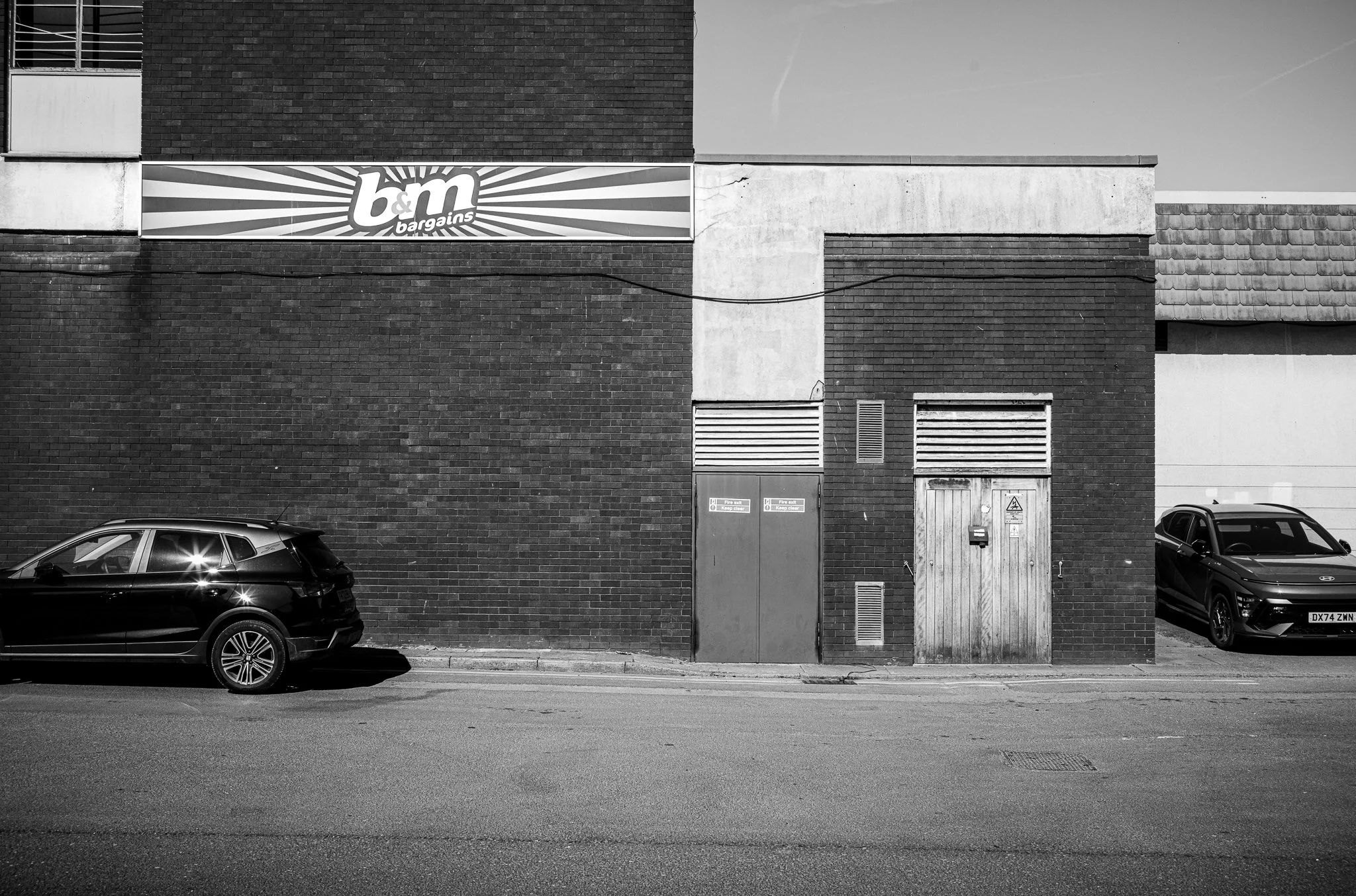
My photographs try to capture this democratic quality. Not the dramatic angles or artistic lighting that might make the space look more important than it is, but the honest documentation of how ordinary people use ordinary space to get on with their lives.
In a world increasingly designed for the wealthy or the photogenic, there's something radical about simply paying attention to the everyday. These lunchtime walks, these brief encounters with functional architecture, remind me that most of life happens in spaces that nobody thinks to celebrate. But maybe that's exactly why they deserve our attention.