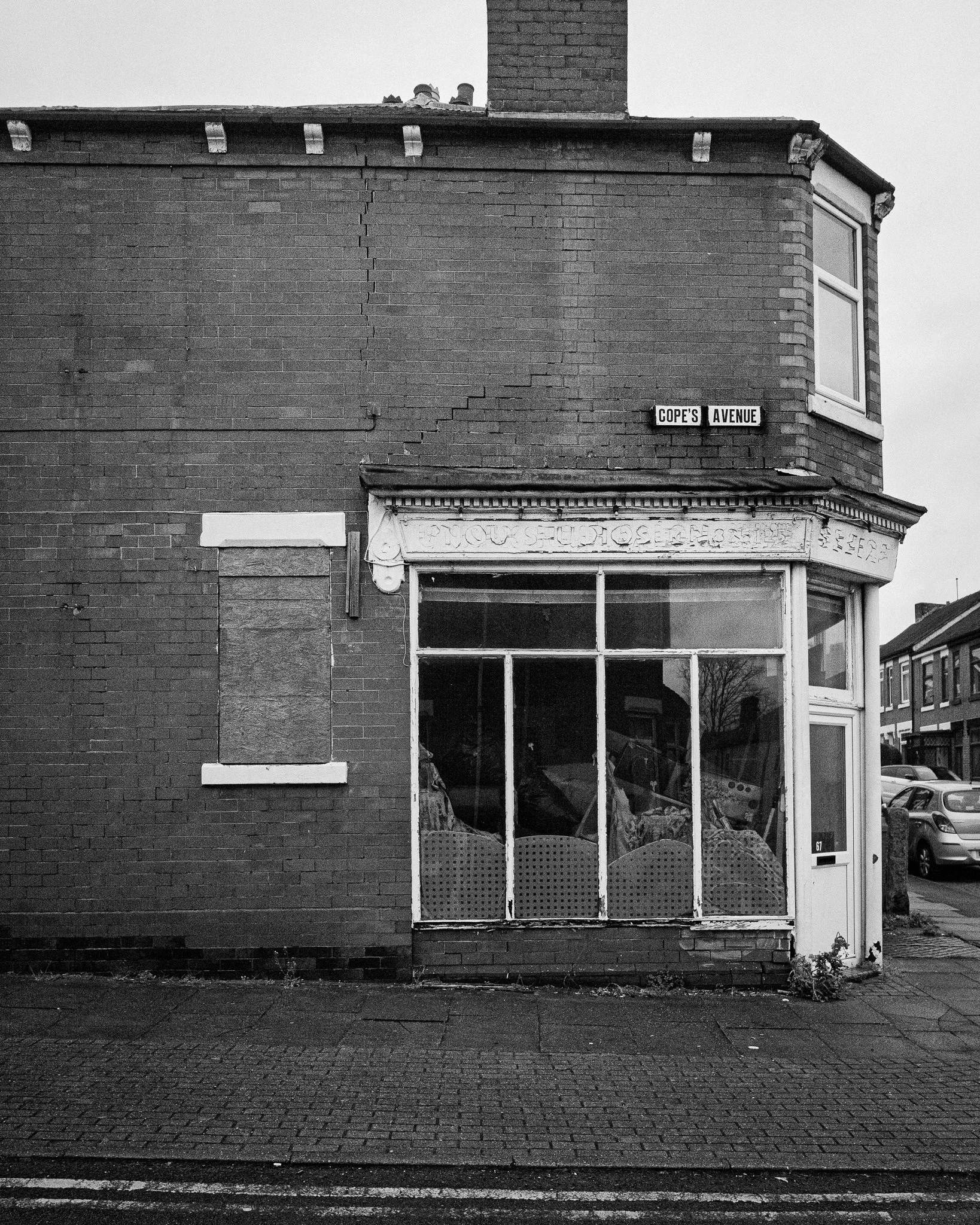
Cope’s Avenue
At the junction of Cope's Avenue and Greengates Street in Stoke on Trent, a former hairdresser's shop holds an vigil of emptiness. The windows that once framed conversations about holidays and children now reflect only passing cars and the changing light of seasons. I think about the intimacy that happened here, the trust required to let someone reshape how you face the world, the gossip over the sound of scissors and blow dryers. Now a space that gathers dust and silence, becoming a different kind of monument to community life.
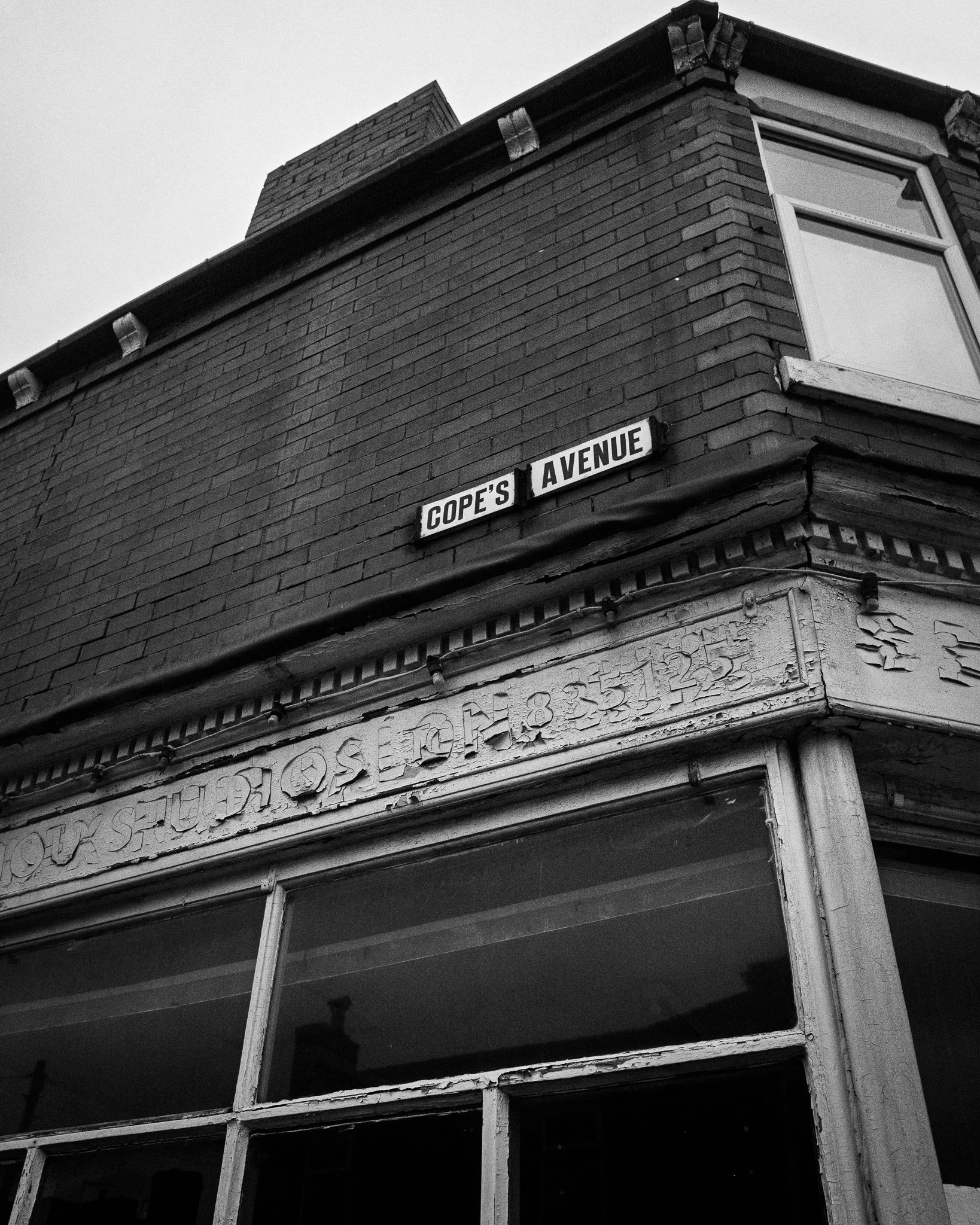
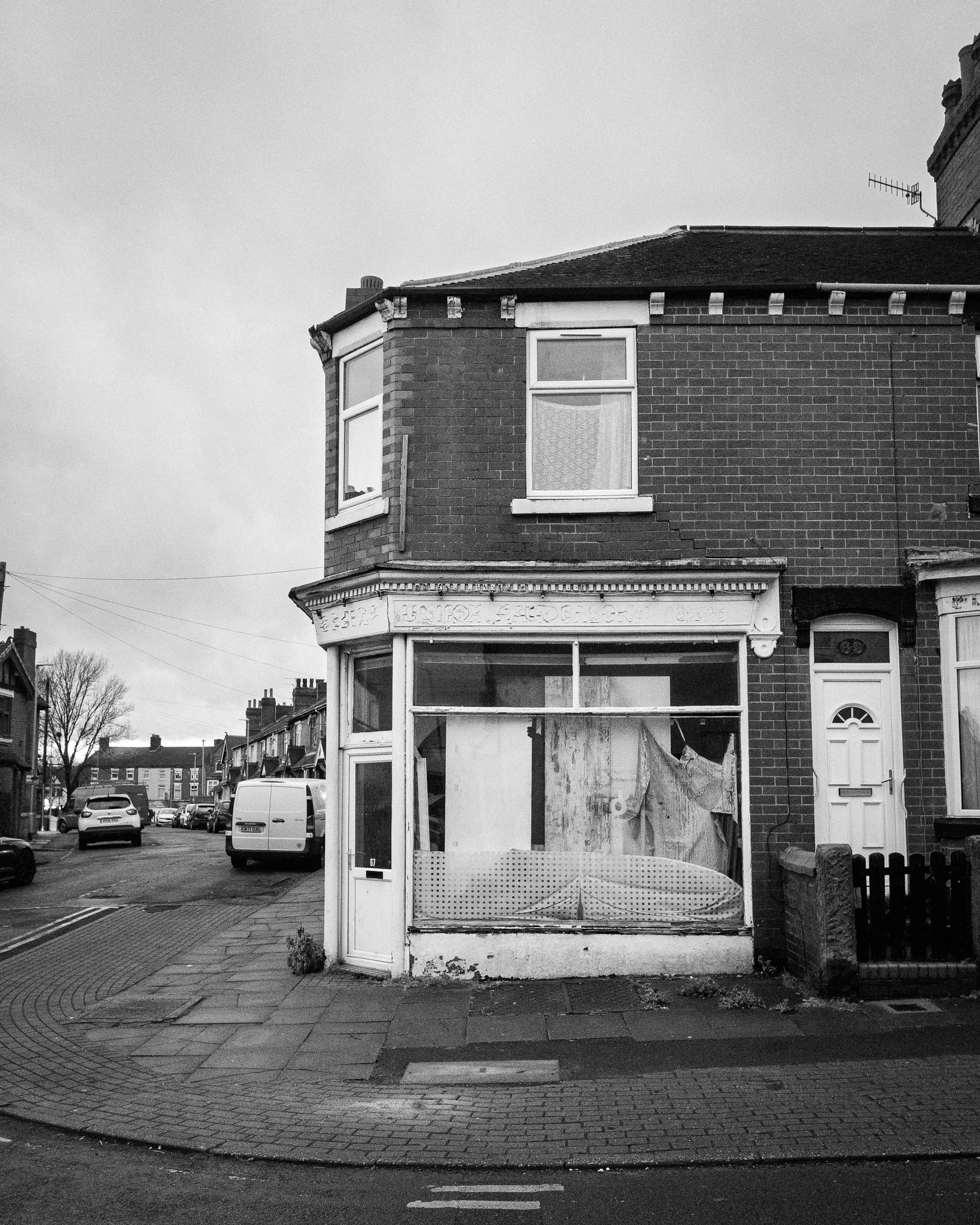
There's something particularly melancholic about empty hairdressers. They're spaces designed for transformation, for small vanities and social rituals that make ordinary life more bearable. The mirrors multiplied hopes and anxieties now multiply absence. At this crossroads, people still pass daily, but the destination that once drew them here has become a question mark in glass and brick. The building waits with a patience of something that has forgotten what it's waiting for. It’s a pause in the urban conversation that stretches longer each year, until emptiness becomes its own kind of purpose.
At the crossroads where four streets meet,
A hairdresser's chair sits empty still,
Where gossip flowed and lives were neat,
Now silence fills the windowsill.
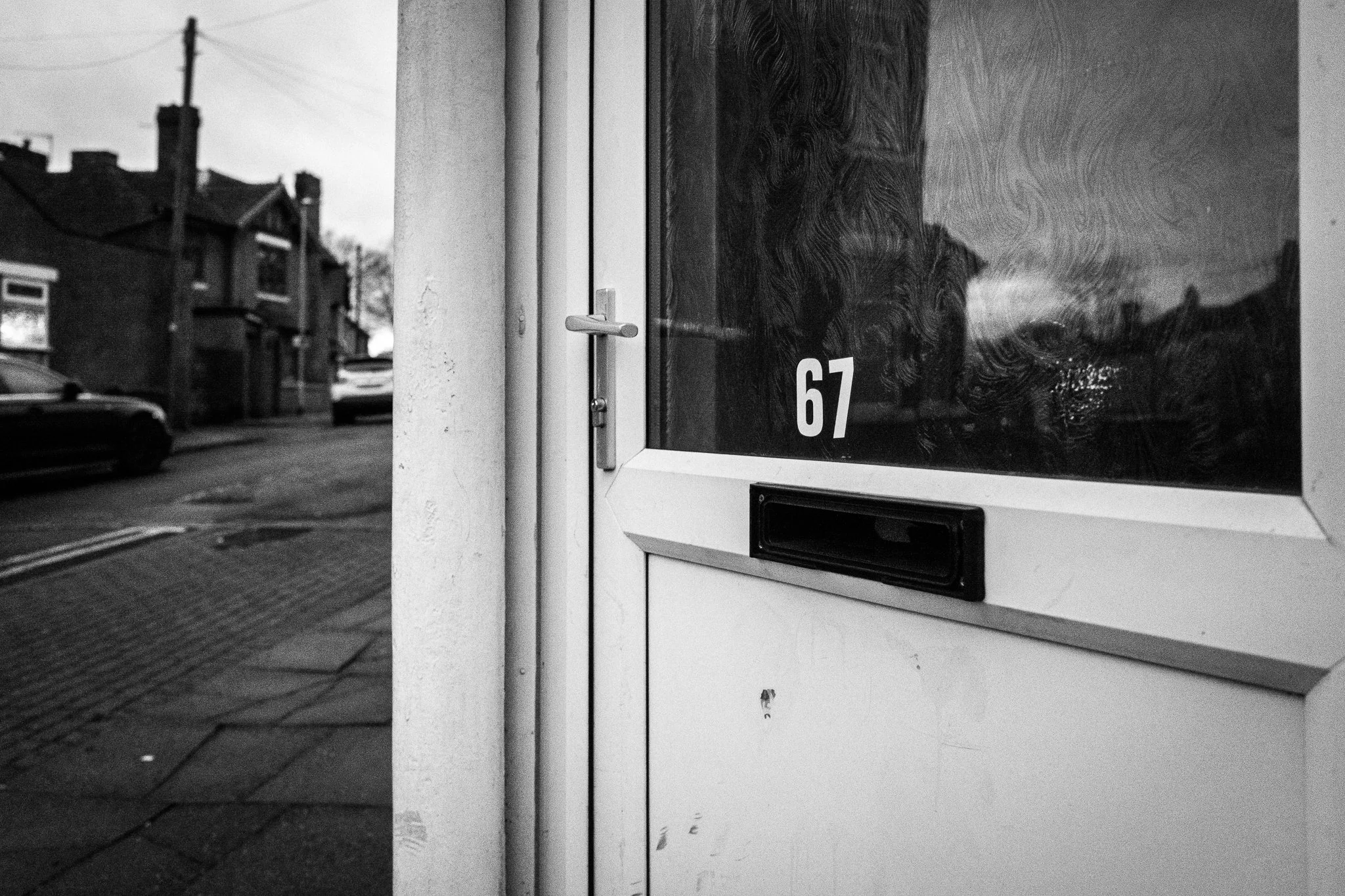
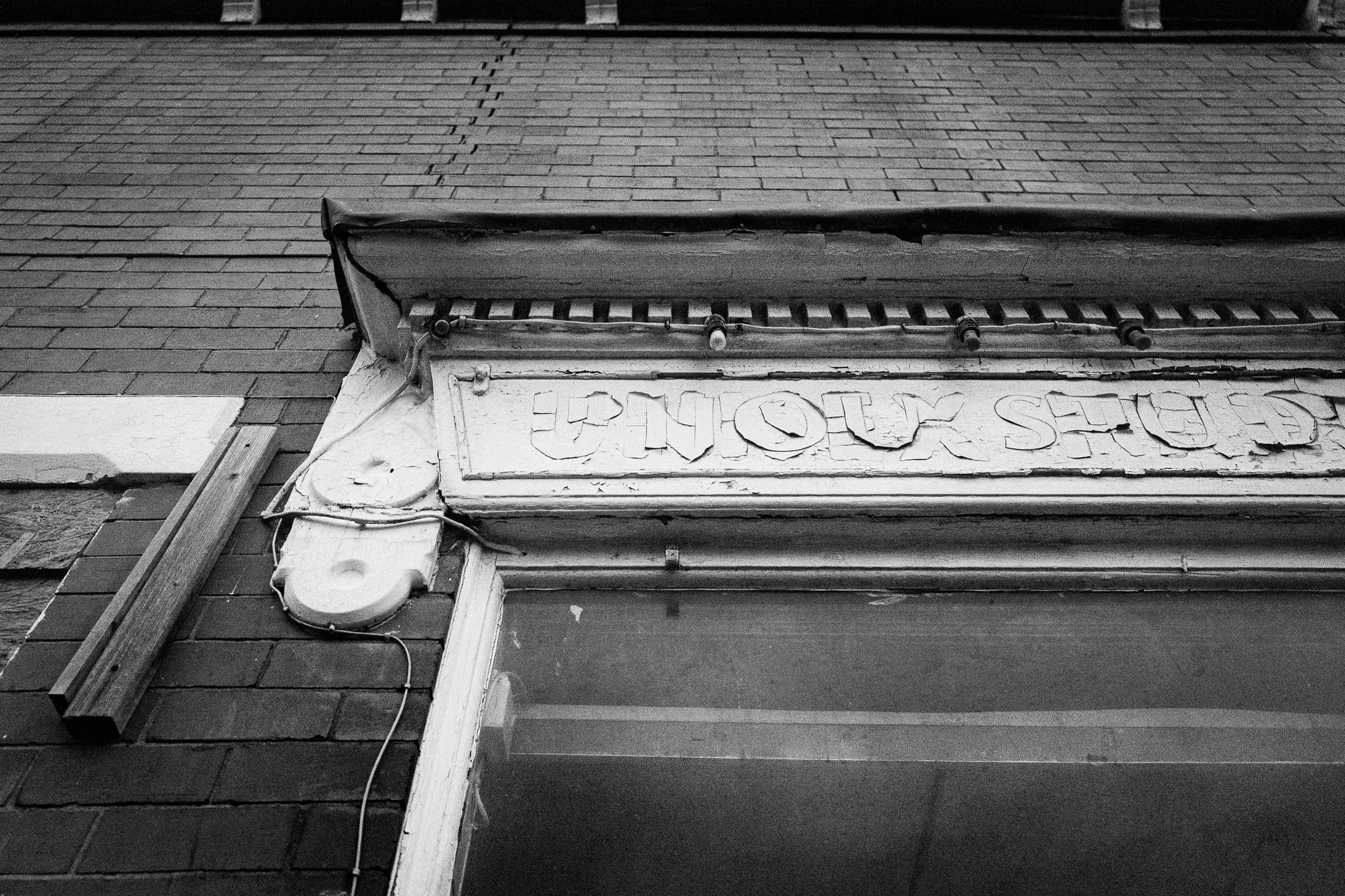
The crossroads becomes meaningful when anchored by emptiness. People approach from four directions carrying their own relationship to this absent presence. Some remember when Mrs. Whatever ran the place, others know it only as landmark ("turn left at the empty shop"). Junctions force a moment of decision, these vacant windows offer no guidance, no invitation to pause or enter. The shop keeps a different time, measured in peeling paint and accumulated grime rather than opening hours.
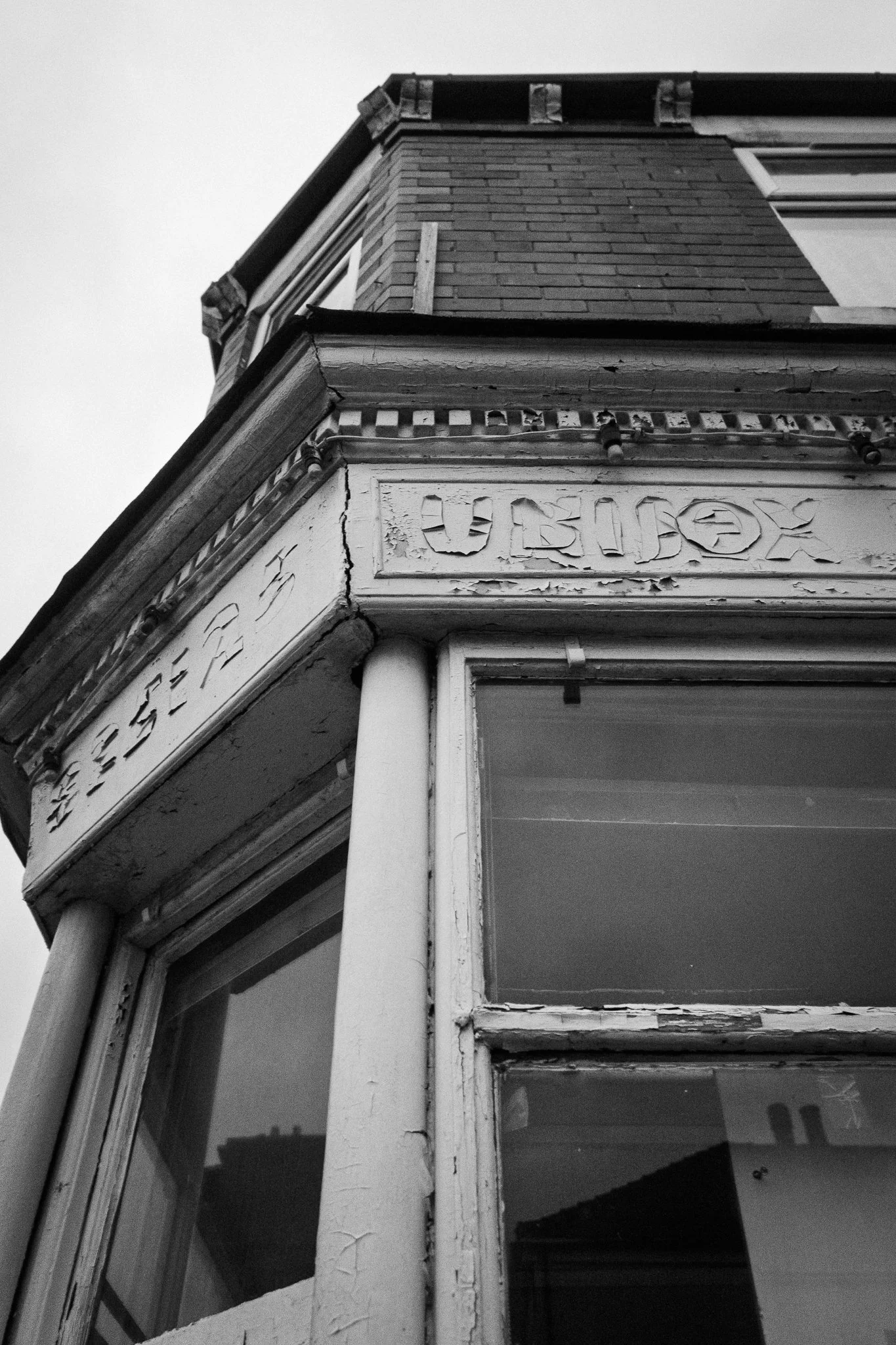
I wonder if empty shops like this become accidental mirrors for the communities around them, reflecting what people have slowly learned to overlook. The hairdresser's closure probably happened gradually, then suddenly - fewer customers, longer hours between appointments, the owner weighing dignity against diminishing returns until the day she simply didn't unlock the door. Now the space serves a different function. It teaches people to expect less, to walk past without hoping, to accept that some losses become permanent features of the landscape. The crossroads still works, traffic still flows, but something essential about choosing your direction has been quietly removed.